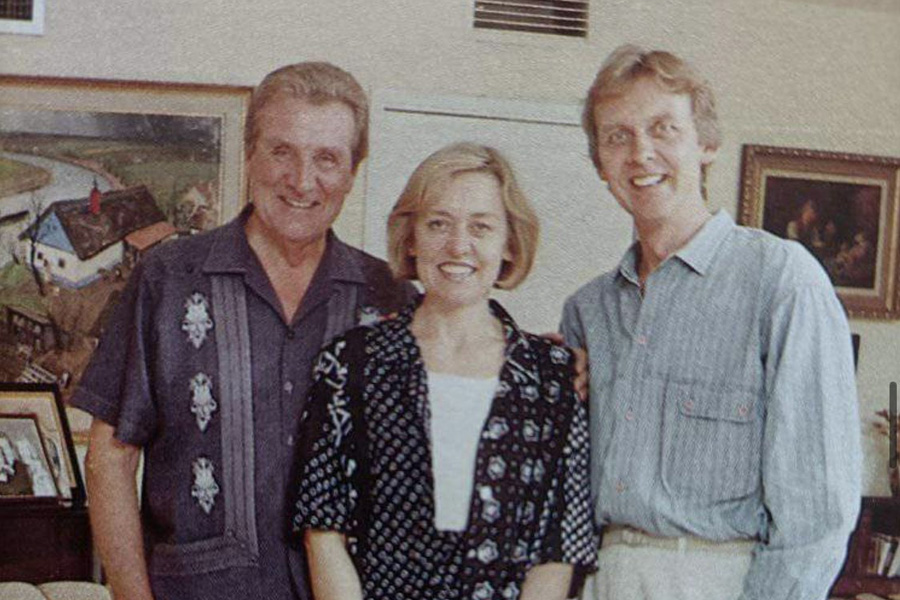
Biographical Information
I have often pondered lives that inherit creative sparks yet choose to shape their own distinctive flames. Rupert Macnee, born on March 5, 1947, in Blackheath, London, stepped into such a world. His parents, both actors immersed in the 1940s theater scene, surrounded him with the pulse of stages and scripts. Financial strains, however, forced the family from Chelsea’s Kings Road to a modest cottage in Rye Harbour on the Sussex coast in 1951. This move, to a property owned by painter Edward Le Bas, became a crucible for creativity. Without television as a distraction, young Rupert crafted his own adventures. He pedaled bicycles through London streets. He played commando in Richmond Park. He joined the Scouts. He ventured into the Lake District and western Scotland. These experiences forged resilience in him like steel tempered in fire.
At age 13, a generous godmother propelled him to boarding school at Bedford in 1960. His father had left for television work in Canada and the United States when Rupert was only four, creating an early sense of independence. Rupert channeled that into filmmaking experiments with friends. He staged sword fights in historical dramas by age 14. After a gap year interning in London film and television circles, he applied to American universities on a whim. Princeton University accepted him. He graduated with the Class of 1969 after switching classes to align with his peers. He blended public and international affairs with anthropology. There, he established a film production course funded by the Ford Foundation. He mentored aspiring filmmakers. He hosted a disc jockey show. He produced short films on town and gown dynamics. Those years expanded his horizons and equipped him with practical skills that would last a lifetime.
Post graduation, Rupert embraced a nomadic freelance path. He researched for CTV in Toronto and contributed to wildlife series. He acquired Canadian citizenship. Work took him to Los Angeles for film editing. It carried him to Ecuador for radio stations. It led him across Thailand and India. He kept journals throughout. He sketched constantly. By the 2010s, he settled in Rancho Mirage, California, to support family. Now 79 years old in 2026, Rupert Macnee continues to create. His path reflects adaptability and quiet determination. He turns every ending into a fresh start, just as his father once advised.
Family and Personal Relationships
Family is the invisible threads that link a life together, and for Rupert Macnee, they are intricate and strong. Patrick Macnee’s son is Rupert. Patrick Macnee, who played the dapper John Steed in The Avengers, brought renown and sophistication to the household. In acting school, he met Rupert’s mother. His 1940s tours included her. He then sought film, theater, and television roles in Britain, Canada, and the US. Both parents divorced in 1956. After decades, father and son reconciled. Rupert cared for Patrick from 2003 until his 2015 Rancho Mirage death aged 93 from dementia. This caregiving taught Rupert the importance of presence over performance.
Barbara Douglas’s son Rupert Macnee. Barbara Douglas, who trained with Patrick and appeared in 1940s performances, decided to retire after her children were born. She struggled financially to raise Rupert and his sister. She moved frequently. She protected them from creditors’ doorbells. Her own illegitimacy and foster care spurred her passionate desire for her kid to succeed in life. She remarried an Edinburgh professor. That union maintained intellectual influence at home. Barbara provided support until her 2012 Coachella Valley death. Rupert’s work ethic and health documentaries were influenced by her perseverance.
Grandchild of Dorothea Mary Henry is Rupert Macnee. Dorothea Mary Henry (Macnee) was the paternal grandmother. A socialite, she was involved in British culture. As the wife of racehorse trainer Daniel Macnee, she raised Patrick and his brother with high standards and equestrian background. Her influence was passed on through decorum and exciting family stories. Rupert felt historical continuity even as his reality changed.
Grandchild of Dorothea Macnee is Rupert. The same Dorothea Macnee was graceful and strong. She was honored for wartime military family support. She combined social charm and practicality, like Rupert’s godmother’s gentlemanly instructions. Despite his parents’ divorce, his grandparents supplied a rich heritage.
Rupert is close to Jenny Macnee, his younger sister. Jenny, born approximately 1950, was a successful Los Angeles cook. Rupert and she settled in Coachella Valley. Their upbringing in turmoil bonded them. Christopher Kit, Jenny’s 1988 son, represents the next generation. Rupert becomes uncle. After years of separation, California families have chosen support and proximity. Rupert is childless. His early views on parental absence’s emotional effects influenced his decision. He invests his relationship energy in lifelong friendships, creative partnerships, and Rancho Mirage extended family gatherings.
Career Details, Work Achievements, and Finance Details
I admire how Rupert Macnee turned versatility into a career mosaic that spans production, direction, writing, editing, and broadcasting across decades. After Princeton, he dove into Canadian television as a researcher for The Untamed World, an Emmy nominated wildlife series. He produced 50 half hour episodes of Friends of Man narrated by Glenn Ford. He produced another 47 hosted by Jonathan Winters. By the early 1980s in Los Angeles, he created the pilot and two seasons of the syndicated comedy series An Evening at the Improv. That delivered 50 hours of stand up and music. It aired on NBC and later A&E. He line produced Showtime’s ACE Award winning Full Frontal Comedy in the 1990s. He contributed to A&E’s Ancient Mysteries with episodes like Seven Wonders of the Ancient World.
His documentary work shone in health education. He co produced Diabetes: A Positive Approach in 1989. That humorous cassette reached over 1.2 million people through the American Diabetes Association. Later projects tackled Kawasaki disease, including a 2006 film shot in India. He supervised content for PBS stations in Seattle and Nebraska on topics from eating disorders to space exploration and World War II history. In 2008, he executive produced Darwin’s Brave New World. That drama documentary miniseries marked the 150th anniversary of On the Origin of Species.
Broadcast executive roles followed at KCTS Seattle and NET Nebraska. Rupert also explored value added DVD materials for Buffy the Vampire Slayer. He developed distance learning programs on economics and marketing. His artistic side emerged more prominently in recent years. He digitized 50 years of doodles and caricatures. These include a long running character named John Nitewright, an English journalist in Florida tabloids. Those sketches, once personal Christmas cards sent since 1977, now form the heart of his website rupert-macnee.com. He shares them daily. He embraces a new identity as an artist. Specific finance details remain private. Rupert has maintained a low profile freelance existence rather than seeking public financial disclosure. His career choices prioritized creative freedom and impact over steady corporate ladders. That independence mirrors the very advice he inherited. Build skills across production, writing, directing, and distribution to weather any ending as a fresh start.
Recent News and Social Media Mentions
Recently, Rupert Macnee has gained subtle but substantial recognition related to his family’s legacy and his own work. He wrote One Tough Dame: Diana Rigg’s Life and Career’s foreword in 2025. His thoughts revealed Rigg’s wit and warmth. They used a 1965 Elstree Studios meeting. Literary and film critics lauded the book. It illuminated Rupert as a caring Avengers memory keeper. A 2020 Coachella Valley Independent profile described him as a filmmaker, artist, and loving son. It highlighted his 2010 Rancho Mirage transfer. It mentioned his career and technical education master’s at Cal State, San Bernardino. Fan encounters include a convention photo with Rupert at a Chiller event honoring his father.
Social media mentions are few yet positive. His Instagram @rupertmacnee posts doodles. These contain 1996 works and personal snippets of a creative life. Since its creation, his X account @rmacnee has posted little but links to his art site. Fan blogs occasionally mention his meetings or the Rigg book preface. They emphasize his connection to Hollywood history without highlighting him. Not much controversy or news has occurred. These nods show a man at ease in the background. Work and family speak quietly to him.
Extended Timeline
I find timelines reveal patterns in a life, and Rupert Macnee’s unfolds with steady evolution. Here is a table summarizing key milestones with dates and numbers for clarity.
| Year | Event |
|---|---|
| 1947 | Birth in Blackheath, London on March 5 |
| 1951 | Family relocation to Rye Harbour cottage |
| 1956 | Parents’ divorce |
| 1960 | Begins boarding school at Bedford at age 13 |
| 1969 | Graduates Princeton University after founding film course |
| 1970s | CTV research in Toronto, wildlife series production, Canadian citizenship |
| 1980s | Creates An Evening at the Improv pilot and two seasons; produces diabetes documentary in 1989 |
| 1990s | Full Frontal Comedy for Showtime; A&E projects |
| 2003-2015 | Cares for father Patrick until death at age 93 |
| 2008 | Executive produces Darwin’s Brave New World |
| 2010 | Settles in Rancho Mirage, California |
| 2012 | Mother Barbara dies in Coachella Valley |
| 2019-2021 | Digitizes 50 years of drawings; master’s studies |
| 2020 | Profiled in Coachella Valley Independent |
| 2025 | Contributes foreword to Diana Rigg biography |
| 2026 | Continues art sharing from Rancho Mirage at age 79 |
This table captures the progression from postwar childhood to present day artistry.
FAQ
What shaped Rupert Macnee’s early views on family and independence?
I believe Rupert Macnee’s childhood experiences of parental separation and financial strain instilled a deep appreciation for self reliance. His father’s absence from age four and the supportive yet challenging role of his mother taught him to value presence and resilience. These influences later guided his decision against having children and his emphasis on chosen family ties in California.
How did Princeton University influence Rupert Macnee’s career trajectory?
I see Princeton as a pivotal foundation for Rupert Macnee. It provided not only a degree but hands on filmmaking experience through a Ford Foundation funded course he helped establish. Exposure to history, anthropology, and international affairs broadened his perspective. It equipped him with skills in research, production, and storytelling that fueled decades of television and documentary work.
In what ways has Rupert Macnee’s artistic side complemented his professional achievements?
I appreciate how Rupert Macnee’s lifelong drawing habit evolved into a public art practice in recent years. Digitizing 50 years of doodles and caricatures allowed him to share personal creations online. It created a new persona that balances his behind the scenes production career with direct creative expression.
What role did Rupert Macnee play in preserving his father’s legacy?
I observe that through caring for Patrick Macnee in his final years and contributing reflections to projects like the 2025 Diana Rigg biography, Rupert Macnee has quietly preserved family history. His insights offer personal context to public fame without overshadowing his own independent path.
Why does Rupert Macnee maintain a relatively low public profile today?
I think Rupert Macnee chooses focus over fame. He channels energy into art, occasional writing, and family support in Rancho Mirage. His freelance background and preference for creative freedom explain the deliberate distance from celebrity circles. It allows his work to stand on its own merits.