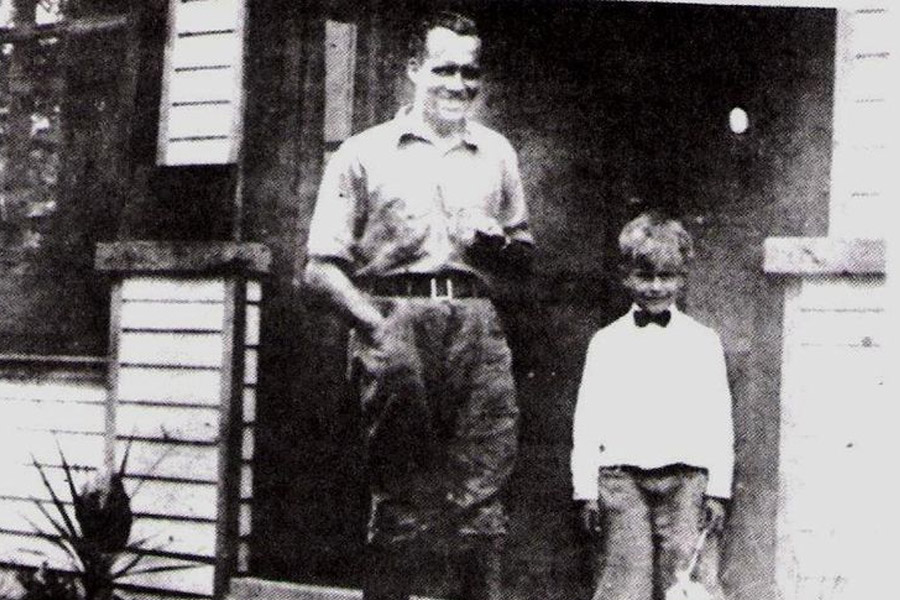
A life that began in Chicago and stretched into family history
The public impact of Russell Whitford Carter was little, but his family shadow was large. Born September 19, 1897, in Chicago, Illinois, he died September 1, 1966, in Grosse Pointe Park, Michigan. 68 years seems straightforward on paper. His life is more like a secret root system under a tall tree in family history. Not a headliner. He shaped the person who did.
Russell lived when identity flowed through employment, marriage, and place. He was a mill or sawmill operator in some records and a real estate salesman in a 1930 census transcription. That mix counts. It depicts a man who alternated between work and commerce, timber and land, and ownership. That’s like little candles along a lengthy corridor in a family history.
The Carter household and the family line
Russell came from the Carter family, a line associated with land, development, and Michigan ties. His father is identified in genealogy material as John B. Carter or John Carter, a successful real estate developer and entrepreneur. His mother is listed as Katie Beatrice Clark. From that family foundation, Russell carried a name that would later appear in the story of Charlton Heston, one of the most recognizable actors of the 20th century.
I think of the Carter family as a bridge between the practical American Midwest and the wider cultural world that Charlton Heston would later inhabit. The bridge was not built in a single moment. It was laid plank by plank through marriages, moves, occupations, and the ordinary force of family life.
Russell’s own household becomes the most important part of his story. He married Lilla A. Baynes, who is also referred to in family accounts under related forms of the surname Charlton and later Heston. The marriage date most often given is November 12, 1921. Their union eventually ended in divorce, but not before it produced children who would carry the family line forward.
Lilla and the shape of the home
Lilla dominates Russell Whitford Carter stories because she anchored the family’s domestic side. History frequently depicts couples as weather behind a landscape painting. We see the mountains, but the weather sets the mood. Family tone came from Lilla.
Family accounts claim Russell and Lilla had three children. Public genealogies list Charlton Heston, Lilla A. Heston, and Alan or Allan Gilbert Heston. Older family histories may have inconsistent data, but the basic pattern is obvious. Russell wasn’t a generic father. In his household, a future actor, a scholar, and another child whose name endures in genealogy were born.
The most renowned child is Charlton Heston, born October 4, 1923. In many biographies, Charlton shines while Russell is hidden. But frame matters. A child is raised by his home environment before the world. Even if it’s impossible to quantify, Russell’s participation in that early atmosphere is important.
Charlton Heston, the son who made the name famous
Charlton Heston became the public face of the family. He grew into an actor known for epic roles, commanding presence, and a voice that seemed carved from stone. He became larger than life. Russell, by contrast, stayed mostly in the quieter registers of record keeping and family memory.
Still, the connection is vital. Charlton’s early life was shaped by the family move to St. Helen, Michigan, a place tied to lumber and northern woods. Russell’s work in or around sawmills and land helped place the family in that environment. The son who would later play Moses and Ben Hur first grew up near a world of timber, open space, and practical survival. That contrast has always struck me. It is like seeing a cathedral rise from a logging camp. The roots are still there in the stone.
Lilla A. Heston, the daughter who built her own path
Lilla A. Heston, one of Russell’s daughters, is a reminder that this family history is not only about celebrity. She went on to become a professor in the Interpretation Department of Northwestern University’s School of Speech, and she was known as an author, editor, and performer. That gives her a separate and substantial place in the family story.
To me, her life suggests a second kind of inheritance. Charlton carried the family into film and public spectacle. Lilla carried it into scholarship, performance, and the classroom. The family line did not move in a single direction. It branched like a river delta, spreading into different worlds while keeping the same source.
Alan or Allan Gilbert Heston, the quieter branch
Alan or Allan Gilbert Heston appears in family records as another child of Russell and Lilla. The public material I found about him is sparse. That silence does not mean he was unimportant. It means his life remained outside the brighter beams of public memory. Many family members live there. They are not the spotlight, but the stage itself. Without them, the scene collapses.
In older genealogies, names often shift slightly, and that is true here. What survives most strongly is the family structure: Russell and Lilla as parents, and at least three children forming the next generation. That structure is enough to show a household with depth, not just a line of descent.
The next generations
Heston’s children and grandkids carried Russell’s legacy into public life. Fraser Clarke Heston directed, produced, wrote, and starred. Adopted daughter Holly Ann Heston Rochell occurs in the family line. Later descendants including Jack Heston, Ridley Charlton Rochell, and Charlie Rochell continue the family tradition.
I find this descent fascinating because it shows how one person can affect generations. Russell was a minor celebrity, but his family was prolific. Time changed the sound, yet the source remained audible.
Work, money, and achievement
Russell’s career was not the kind that leaves a thick scrapbook of awards and headlines. He appears as a mill operator, sawmill operator, or real estate salesman depending on the record. That is enough to show a working life grounded in the material realities of his era. Wood, land, housing, and movement shaped his world.
As for finances, there is no clear public ledger of wealth or income. What can be said is that he came from a family connected to real estate and development, and that background likely gave the Carter household some stability. His achievement was not a public trophy. It was continuity. It was the ability to hold a family together long enough for the next generation to step into a wider world.
Timeline of Russell Whitford Carter
| Date | Event |
|---|---|
| September 19, 1897 | Born in Chicago, Illinois |
| November 12, 1921 | Married Lilla A. Baynes |
| October 4, 1923 | Son Charlton Heston was born |
| 1927 | Daughter Lilla A. Heston was born |
| 1930 | Appears in a census transcription as a real estate salesman |
| 1932 | Alan or Allan Gilbert Heston was born |
| By 1933 | Marriage to Lilla ended in divorce |
| September 1, 1966 | Died in Grosse Pointe Park, Michigan |
FAQ
Who was Russell Whitford Carter?
Russell Whitford Carter was an American man born in 1897 who is best remembered as the father of Charlton Heston. His life appears in family records, genealogy pages, and historical references connected to the Heston family.
Who was Russell Whitford Carter married to?
He was married to Lilla A. Baynes, who is also referenced in some family material under related names. Their marriage is commonly dated to November 12, 1921.
How many children did Russell Whitford Carter have?
The most consistent family records point to at least three children: Charlton Heston, Lilla A. Heston, and Alan or Allan Gilbert Heston.
Was Russell Whitford Carter famous in his own right?
Not in the usual public sense. He was not a celebrity, politician, or public executive. His importance comes from family history, especially as the father of Charlton Heston and the ancestor of later descendants.
What kind of work did Russell Whitford Carter do?
He is described in different records as a mill operator, sawmill operator, and real estate salesman. That suggests a working life tied to industry and property.
Why does Russell Whitford Carter matter in family history?
He matters because family history is often built by people who never become famous. Russell was one of those people. His life formed part of the foundation on which a well known American family was built, and that makes him worth remembering on his own terms.