The name that still echoes through true crime history
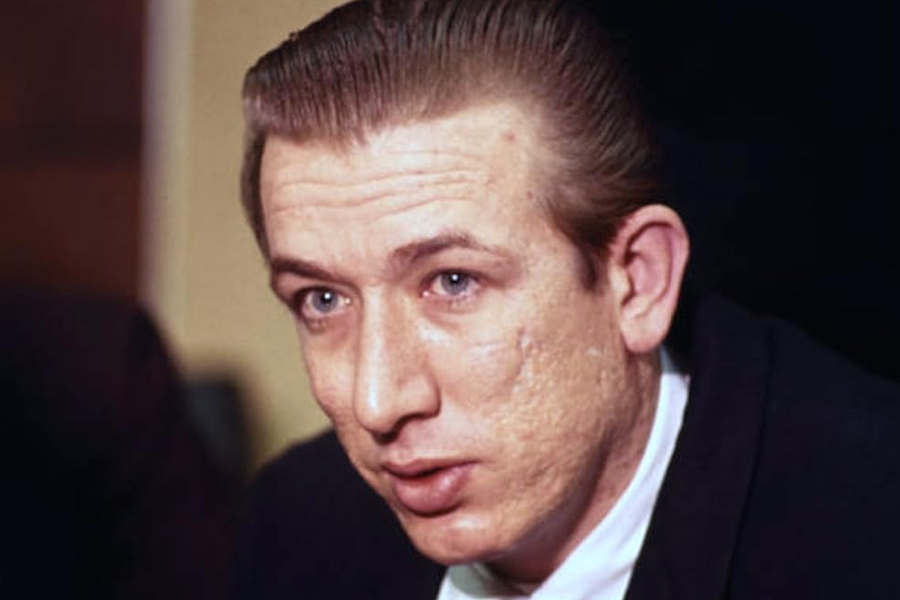
The narrative of Richard Benjamin Speck begins in a Midwestern family and becomes one of the darkest episodes in American criminal history. His birthdate was December 6, 1941, in Kirkwood, Illinois. He died in prison on December 5, 1991, one day before his 50th birthday. Those dates frame a life that went from childhood turmoil to violent notoriety like a storm over a flat horizon.
Speck was not shaped by one event. His life was based on loss, resentment, drift, and self-destruction. The story’s humanity comes from his family. Before the killings, prison years, interviews, and infamy, a child in a packed household watched his world crumble.
The family at the center of Richard Benjamin Speck’s life
Richard Benjamin Speck came from a large family. He was one of eight children, and the household was marked by religious discipline, financial strain, and later, deep conflict. His father died when Richard was still young, and his mother remarried a man who brought instability into the home. That shift changed the emotional weather of the family.
| Family member | Relationship | Notable details |
|---|---|---|
| Benjamin Franklin Speck | Father | Died in 1947, when Richard was a child |
| Mary Margaret Carbaugh Speck | Mother | Religious, later remarried after Benjamin’s death |
| Carl August Rudolph Lindberg | Stepfather | Became a disruptive and disliked presence |
| Carolyn Speck | Sister | One of Richard’s siblings |
| Sara Thornton | Sister | Lived with Carolyn and Richard for a time |
| Martha Thornton | Sister | Later sheltered Richard in Chicago |
| Howard Speck | Brother | Helped Richard find labor work |
| Robert Speck | Brother | Died in a car accident in 1952 |
| Shirley Annette Malone | Wife | Married Richard in 1962 |
| Robbie Lynn Speck | Daughter | Born July 5, 1962 |
Benjamin Franklin Speck was Richard’s father and, by many accounts, the one steady adult in his early life. He worked hard, died young, and left a gap that never really closed. Mary Margaret Carbaugh Speck carried the family through that loss, but remarriage brought a new household arrangement and a new emotional climate. Carl Lindberg, the stepfather, was widely described as abusive, erratic, and criminally inclined. That kind of home can feel like a cracked mirror. Everything is there, but nothing reflects cleanly.
Richard’s siblings form an important part of the story too. Carolyn Speck is specifically identified as one of the siblings in the family. Sara Thornton and Martha Thornton appear in the family history as sisters who gave Richard temporary shelter and support. Howard Speck, one of his brothers, helped him find labor work in Monmouth. Robert Speck died in 1952 in a car accident, another blow in a household already carrying too much grief. In a family of eight children, loss did not arrive politely. It kept knocking.
Shirley Annette Malone, Richard’s wife, enters the story from a very different angle. She met him at the Texas State Fair in 1961, married him in 1962, and gave birth to their daughter Robbie Lynn Speck on July 5, 1962. That marriage was part of his brief attempt at normal adult life. It did not last in any meaningful way, but it remains one of the few places where his life touches something domestic, brief and fragile as a glass blown too thin.
Childhood pressure, adolescence, and the road into crime
Richard Benjamin Speck did not come out of nowhere. He was a product of long instability, but he also made choices that deepened the damage. He grew up first in Illinois and later in Dallas, Texas, after his mother remarried. By the time he was a teenager, he had already started collecting trouble the way some people collect keepsakes.
His school years were poor. His behavior was worse. He drank heavily, clashed with authority, and drifted through arrests and juvenile problems. At 16, he had already entered the criminal system. He was not building a career so much as dissolving one before it could begin. The jobs he held were low wage and temporary, including labor work for a 7-Up bottling company in Dallas from 1960 to 1963. Work did not anchor him. It skimmed across the surface, never getting deep enough to hold.
The family details matter here because they explain atmosphere, not excuse. His father’s early death, his mother’s remarriage, the abuse, the poverty, the sibling losses, the friction in the home. These are the roots of a tree with damaged bark. But the branches still bent toward violence on their own.
The crimes that defined his name
By the mid 1960s, Richard Benjamin Speck had already served prison time for forgery and burglary. He was not a new offender when he committed the crimes that made him infamous. In July 1966, he murdered eight student nurses in Chicago. One survivor, Corazon Amurao, hid beneath a bed and lived to describe the horror. That survival became crucial to the case and to the public memory of it.
Speck was apprehended on July 17, 1966. His trial began in April 1967, and he was convicted on all eight murder counts. He was first sentenced to death, but the sentence was later overturned and replaced by a prison term that effectively meant life behind bars. The case moved through appeals and landmark legal changes, and Speck remained in custody until his death in 1991.
The scale of the crime still feels like a black hole in the center of his biography. Everything before it is drawn inward. Everything after it is shadow.
Prison life, notoriety, and the last years
Grim fascination surrounded Speck in prison. He gave a famous 1978 interview and starred in a 1988 jail film. These moments kept his name alive but made him into a theatrical villain in fluorescent light. He was repeatedly denied parole. He died at Joliet prison on December 5, 1991.
Later years felt like an echo chamber. After doing what made his life memorable for the wrong reasons, all else was resonance. He had lost his family to death, divorce, alienation, and memory. Still, the names important because they remind me that even the most notorious lives begin in homes, not headlines.
Extended family portrait in dates and turning points
The timeline of his family life is short, but it carries weight.
Richard was born in 1941.
His father died in 1947.
His mother remarried in 1950.
The family moved to Texas in 1951.
His brother Robert died in 1952.
He met Shirley Malone in 1961.
He married in 1962.
His daughter Robbie Lynn was born in 1962.
That is the frame. Inside it sits a boy becoming a man without enough structure to hold him. The family story is not a decoration around the crime story. It is the weather system behind it.
FAQ
Who were Richard Benjamin Speck’s closest family members?
His closest family members included his father Benjamin Franklin Speck, his mother Mary Margaret Carbaugh Speck, his siblings Carolyn, Sara Thornton, Martha Thornton, Howard, and Robert, plus his wife Shirley Annette Malone and daughter Robbie Lynn Speck. The family was large, but not stable, and several members played direct roles in shaping his early life.
What happened to Richard Benjamin Speck’s father?
Benjamin Franklin Speck died in 1947 of a heart attack. Richard was still a child at the time, and the loss removed one of the few grounding forces in his early years.
Who was Richard Benjamin Speck’s stepfather?
His stepfather was Carl August Rudolph Lindberg. He entered the household after Mary Margaret Carbaugh Speck remarried in 1950. Accounts describe him as abusive, unstable, and deeply resented by Richard.
Did Richard Benjamin Speck have children?
Yes. He had at least one daughter, Robbie Lynn Speck, who was born on July 5, 1962. She was born while Speck was already entangled in criminal activity and jail time.
Was Richard Benjamin Speck ever known for legitimate work?
Only briefly. He worked low wage labor jobs, including work for a 7-Up bottling company in Dallas and a short attempt at merchant marine work. He did not build a lasting lawful career.
Why does Richard Benjamin Speck’s family history matter?
Because it shows how a violent public figure grows out of a private world. The family does not explain everything, but it gives shape to the early pressures, losses, and instability that shadowed his life from the start.