A life built with steel, memory, and family
When I look at the story of Miguel Bozzo Chirichignio, I see a life that feels less like a headline and more like a foundation. Solid. Measured. Built to last. He was born in Lima in 1920 and died there in 2006, but the span of his life is only part of the picture. What matters more is the shape he left behind: in engineering, in teaching, in family, and in the public memory carried by his children and grandchildren.
He was a Peruvian civil and structural engineer whose name appears again and again in the history of the Universidad Nacional de Ingeniería. He was not simply part of that institution. He helped shape it. He became the first director of the Institute of Structures, a role that placed him at the center of structural engineering at a time when modern construction in Peru was still finding its voice. That is a rare kind of legacy. Some people build homes. Some build bridges. Some build the minds that build everything else.
Early roots and the Bozzo Chirichigno family line
Miguel’s family background gives his story a clear frame. His parents were Juan Bozzo Olcese and Gerarda María Chirichigno. From those names, two family currents meet, Italian and Peruvian, and the surname itself carries the trace of both inheritance and identity. In many records, the family appears under the spelling Bozzo Chirichigno, while the spelling provided here, Chirichignio, remains the one I keep in this article.
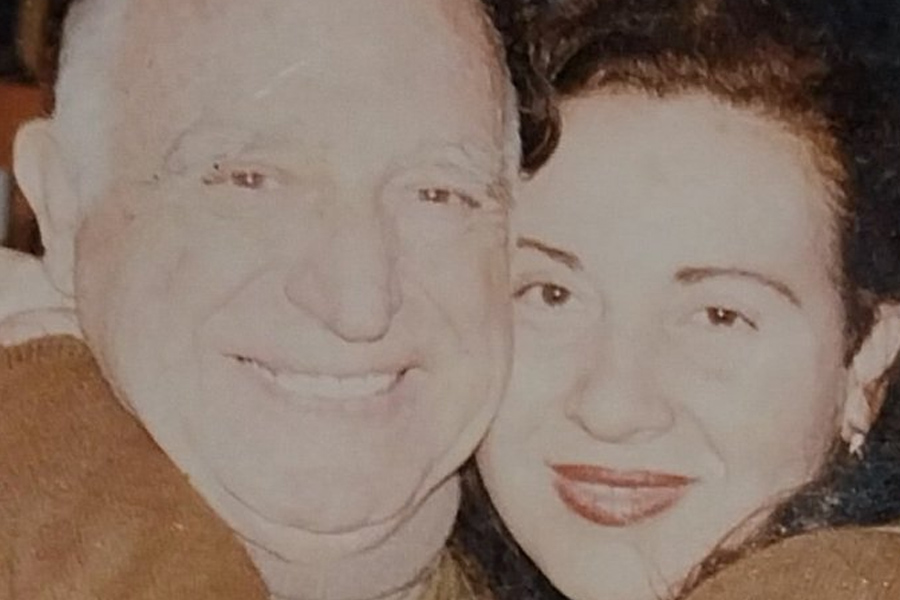
Family life for Miguel was not a side note. It was central. He married Victoria Luisa Rotondo Mendoza on 3 August 1950 in La Punta, Callao. That date matters because it places his family story in the middle of his professional rise. It was not a quiet afterthought. It was part of the architecture of his life.
Together they had four children: Juan Miguel Bozzo Rotondo, Laura Cecilia Bozzo Rotondo, Susana Liliana Bozzo Rotondo, and Luis Miguel Bozzo Rotondo. Four children. Four branches from the same trunk. Each one carried a different public path, but all of them remained tied to the same family origin.
Laura Bozzo and the public face of the family
Most famous of Miguel’s children was Laura Cecilia Bozzo Rotondo. Her name appeared in television, law, and debate outside Peru, but her family link remained central. She is a major reason Miguel’s name is still around.
Laura’s public prominence often shines a light on her father, Miguel, who never sought media attention. The older generation stands like a column behind a noisy and restless public life, with him as the parent. That contrast is remarkable. Laura moved in the light. Miguel was in the structural shadow, where actual load is borne.
Laura married Mario de la Fuente, making Miguel the grandpa of Victoria and Alejandra Bozzo. Later references call Victoria Victoria de la Fuente Ayers. These grandchildren introduce a more public, modern generation that is nevertheless rooted in Miguel’s genealogy.
The grandchildren and the continuation of the line
Victoria de la Fuente Ayers is commonly identified as Laura’s elder daughter. She has married Adam Ayers, and their children include Atlas Ayers and Phoenix Ayers. That means Miguel’s family tree does not stop at the second generation. It continues into a third and then a fourth, where names move across countries, social platforms, and public appearances.
Alejandra de la Fuente is also part of that next wave. She is another granddaughter whose name appears in entertainment and media circles. The family history here is not abstract. It is living, visible, and still being written. The old engineer’s legacy continues through people who live very different lives from his own, yet still carry his bloodline.
Juan Miguel, Susana, and Luis Miguel
Juan Miguel Bozzo Rotondo appears as Miguel’s son, and the records around him are more private than those around Laura. That privacy gives him a quieter place in the family story. Not every branch grows into public fame. Some remain closer to the inner shape of the tree.
Susana Liliana Bozzo Rotondo is another important link. She is identified as a daughter and as a mother herself, with children listed as Elisa Susana Rodríguez Bozzo and Pablo Alberto Rodríguez Bozzo. That adds another layer to the family map and shows how the Bozzo line continues through ordinary domestic life as well as public recognition.
Luis Miguel Bozzo Rotondo stands out for his connection to engineering. He is the son who appears in professional association with his father, including as coauthor of a structural engineering book. That detail matters because it suggests continuity not only of blood but of craft. In families like this, knowledge can pass like a tool from one hand to another.
Career achievements that shaped an institution
Miguel was heavily involved in structural engineering and academic leadership. He was the first director of UNI’s Institute of Structures, now Institute of Structures and Construction. This role demands trust, technical expertise, and a stable mind.
He was a civil engineering dean and structural design expert. The Paraboloide FIC UNI, a mark of his work and era, is one of his most recognizable symbols. Reading that as more than a building. I saw it as a solid signature. Some signatures are inked. Others are drawn in reinforced angles and forms that last decades.
His published work shows his technical depth. 2003’s Losas reticulares mixtas: project, análisis y dimensionamiento was co-authored with Luis M. Bozzo Rot His work includes Industrialización y Construcción de Grandes Luces. His titles demonstrate his practicality. Structure, analysis, dimensioning, and large-span construction were his tasks. Load, balance, and form engineers speak that way.
Why his story still appears today
Miguel Bozzo Chirichignio remains relevant not because he sought celebrity, but because his family and his work keep pulling him back into view. His daughter Laura Bozzo became a public figure. His grandchildren became visible in modern media. His engineering work remained physically present at UNI and intellectually present in technical publications.
That combination makes his story unusually durable. He belongs to the quieter kind of legacy, the kind that does not fade because it has been built into walls, books, family names, and institutional history. His life is not a bright flare. It is a lamp that continues burning in several rooms at once.
FAQ
Who was Miguel Bozzo Chirichignio?
Miguel Bozzo Chirichignio was a Peruvian civil and structural engineer born in Lima in 1920 and died there in 2006. He was closely associated with the Universidad Nacional de Ingeniería and was the first director of its Institute of Structures.
Who were his parents?
His parents were Juan Bozzo Olcese and Gerarda María Chirichigno. Their names place him within a family line that later became publicly recognized through both professional and media connections.
Who was his spouse?
He married Victoria Luisa Rotondo Mendoza on 3 August 1950 in La Punta, Callao. Their marriage became the basis of a family line that later included several public figures.
How many children did he have?
He had four children: Juan Miguel Bozzo Rotondo, Laura Cecilia Bozzo Rotondo, Susana Liliana Bozzo Rotondo, and Luis Miguel Bozzo Rotondo.
Which family member is the most publicly known?
Laura Cecilia Bozzo Rotondo is the most publicly known. She became a television personality and lawyer, which brought the Bozzo family name into broader public attention.
Who are Miguel Bozzo Chirichignio’s grandchildren?
The publicly mentioned grandchildren include Victoria de la Fuente Bozzo, also referred to as Victoria de la Fuente Ayers, and Alejandra de la Fuente Bozzo. Other family branches also extend through Susana’s children.
What was Miguel Bozzo Chirichignio known for professionally?
He was known for structural engineering, academic leadership, and contributions to the Universidad Nacional de Ingeniería. He also coauthored engineering books and is linked to the Paraboloide FIC UNI.
Did he leave a written legacy?
Yes. His name appears in engineering publications, including works on reticular slabs and large-span structures. That written legacy shows that his expertise was not only practical but also documented and taught.
Why does his name still matter?
His name still matters because his work helped shape engineering education and because his family remained visible in public life. Together, those two threads keep his story alive across generations.