A Life Shaped by Art, Memory, and Purpose
I see Judy Ellis Glickman as a figure who moves through American photography like a steady light through fog. Her life blends art, memory, family, and philanthropy into something larger than a career. She is a photographer, collector, and humanitarian whose work has reached far beyond the frame. Her images do not merely record. They remember. They hold grief, dignity, and human endurance in the same breath.
Public biographies place her in California in the orbit of UCLA, where she earned a bachelor’s degree in 1959 and later completed counseling certification. That early academic path is important because it shows a mind drawn to people as much as images. She did not become a photographer in isolation. She came to photography with a humanist instinct already in place, and that instinct became the thread running through her work.
She is also the daughter of Dr. Irving Bennett Ellis and Louise Ellis. Her father was not just a parent but a visual influence, an early photographer whose presence shaped her eye. I think that matters because family influence in art often works like an invisible river. It keeps flowing under the surface, guiding choices years later. Judy’s photography feels like that kind of inheritance. It is personal, but it is also disciplined, intentional, and emotionally alert.
Photography, Witness, and the Pull of History
UCLA and other workshops helped Judy Ellis Glickman start her photography career in the 1970s. Her Holocaust-related work, portraiture, and carefully curated photography collections became her specialty. Her photos are generally pensive. They encourage long, repeated viewing.
First photographing Auschwitz Birkenau and other European Holocaust sites in 1988 was a career highlight. It was a tipping point. Her work then really explored memory and witness. She didn’t only photograph places. She recorded catastrophe’s aftermath and memory’s persistence. Her photos illuminate old ground.
She later organized and contributed to significant Holocaust-focused exhibitions that toured. Her novels include Both Sides of the Camera, For the Love of It, Upon Reflection, Beyond the Shadows, and Presence. These labels indicate her practice’s essence. She never focused on one perspective. She has gazed from both sides, beyond reflection, beyond shadows, and into history’s places.
Her collection is impressive. Public descriptions list about 650 photography, portraiture, social justice, and Pictorialism images. Such collecting is not passive ownership. Conscience-based curation. Images matter and the world needs texture-rich memory, says an archive.
Judy Ellis Glickman and the Lauder Family
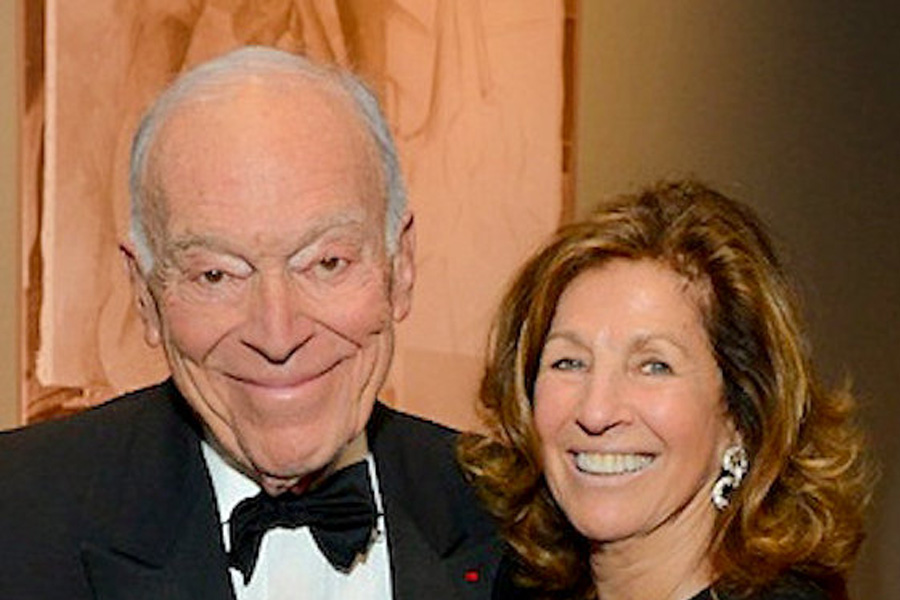
Judy Ellis Glickman’s personal life is closely tied to the Lauder family through her marriage to Leonard A. Lauder. They married on January 1, 2015. Leonard Lauder, a major business leader and philanthropist, became her husband and partner in a shared world of art, culture, and giving.
Before that marriage, Judy was married to Albert Brenner Glickman, also known as Al Glickman, for 54 years. Their marriage formed the foundation of a large family. Public records identify four children.
| Family Member | Relationship | Publicly Known Details |
|---|---|---|
| Albert Brenner Glickman | First husband | Real estate developer and philanthropist |
| Leonard A. Lauder | Second husband | Chairman emeritus of Estée Lauder Companies |
| Jeffrey L. Glickman | Son | Rabbi, associated with Temple Beth Hillel in Connecticut |
| Tigraw Glickman, later Dr. Tigraw Kastenberg | Daughter | Psychology teacher, family and professional life noted publicly |
| David P. Glickman | Son | Entrepreneur, linked in public sources to Justice Technology |
| Brenner J. Glickman | Son | Senior rabbi at Temple Emanu El in Sarasota |
Her children each appear to have built distinct lives of service, intellect, and leadership. Jeffrey pursued rabbinic work. Tigraw entered psychology and teaching. David moved into entrepreneurship. Brenner became a rabbi as well, showing that the family’s public identity is not centered only on wealth or prominence but on contribution. The family tree looks like a branching oak, each limb reaching toward a different field of public life.
Judy’s role as mother is one of the strongest themes in her family story. She is not presented only as the spouse of a powerful man or the daughter of an influential photographer. She is also the center of a family network that has carried education, faith, business, and service into the next generation.
Philanthropy, Awards, and Cultural Influence
Judy Ellis Glickman’s career is tied to philanthropy. Her family has sponsored libraries, museums, Holocaust education, nursing education, and artistic institutions. A large donation of her photography collection to the Portland Museum of Art made private collecting public. The museum received almost 600 of her images, turning them into a municipal resource.
Her honors demonstrate her influence. Artists, Holocaust educators, and cultural groups have honored her. Awards do more than adorn resumes. This shows how her art bridges boundaries. She’s more than a photographer. She protects memories and promotes culture.
The Judy Glickman Lauder Foundation’s finances are most public. It has supported many charities, focusing on education and human services. Her foundation gives displays how her values are institutionalized. Long-lasting influence frequently operates like way. It originates privately and solidifies into structures that survive the individual.
Recent Public Mentions and Continuing Presence
In recent years, Judy Ellis Glickman has continued to surface in exhibitions, museum programming, and public remembrance connected to her work and her family. Her photography has remained active in the cultural conversation, especially around Holocaust memory and Danish rescue history. After Leonard Lauder’s death in 2025, public references to Judy became part of a broader family narrative that linked art, business, and philanthropy.
What stands out to me is that her visibility has not depended on constant self promotion. Instead, it has come through the staying power of the work itself. Her photographs keep finding new rooms to enter. Her name keeps reappearing where memory is being preserved. That kind of presence is quiet, but it lasts.
FAQ
Who is Judy Ellis Glickman?
Judy Ellis Glickman is an American photographer, collector, humanitarian, and philanthropist. She is especially known for Holocaust related photography, her large art collection, and her long commitment to cultural and educational giving.
Who are the immediate family members publicly associated with Judy Ellis Glickman?
Publicly identified family members include her parents Dr. Irving Bennett Ellis and Louise Ellis, her first husband Albert Brenner Glickman, her second husband Leonard A. Lauder, and her children Jeffrey, Tigraw, David, and Brenner Glickman.
What is Judy Ellis Glickman best known for in her career?
She is best known for photography that engages memory, history, and Holocaust witness. Her work also includes portraiture and a significant collecting practice that has shaped museum and philanthropic spaces.
How many children does she have?
Public records identify four children.
What are the major themes in her work?
The major themes are remembrance, survival, historical witness, human dignity, and the emotional power of photographs.
What makes her family notable?
Her family combines religious leadership, entrepreneurship, philanthropy, and cultural influence. Her children each followed distinct public paths, while her marriages linked her to two prominent family histories.
What is the significance of her photography collection?
Her collection is significant because it contains a large body of important photographs and has been shared with the public through museum gifts and exhibitions. It is both an artistic archive and a cultural resource.