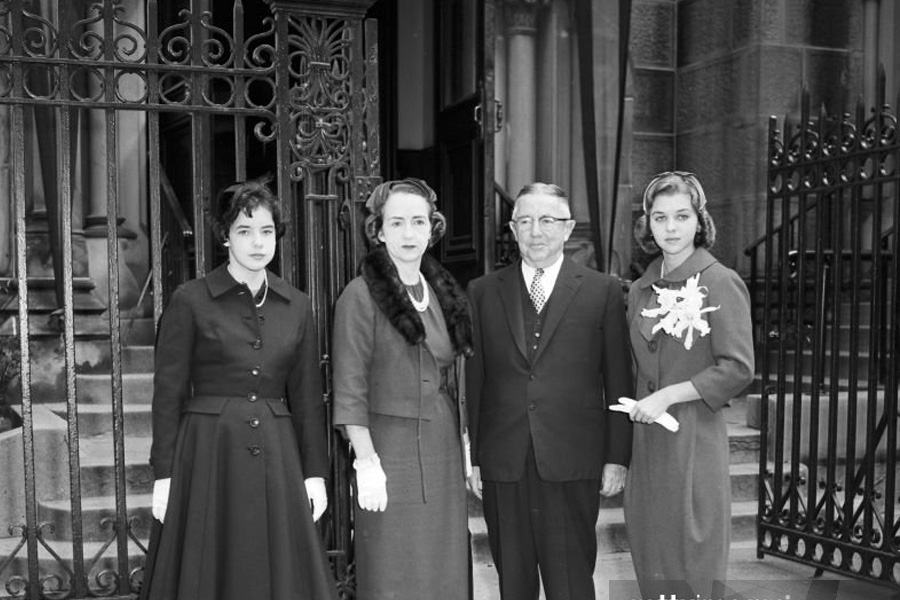
The first traces of Lester Napier Stockard
When I look at the life of Lester Napier Stockard, I see the outline of an American family story shaped by movement, business, and inheritance. He was born on 17 March 1893 in Warrington, Escambia County, Florida, a place that already suggests salt air, distance, and the pull of the coast. His parents were Samuel Fountain Stockard and Lucy Hawkins Williams, and that early setting feels important. The sea was not just scenery in his life. It seems to have become part of his professional identity.
The earliest clear public record I found places him in Pensacola during the First World War as a United States Navy oiler. That detail matters. An oiler was not a ceremonial role. It was work done close to the engine of a ship, where heat, pressure, and routine all mattered. It is easy to imagine that this kind of labor left its mark. Before he became associated with shipping business and family prominence, he was already living inside the machinery of maritime life.
A man tied to the shipping world
Lester Stockard’s life is expanded by his later designation as a shipping executive and magnate. It means he shifted from ships and service to trade, transport, and profit-making business. Time, discernment, and long-term thinking are valued in shipping. The pond is large. Contracts, timetables, and danger abound.
The public record does not provide a comprehensive ledger of his economic activity, but it shows that his name remained associated with maritime matters after his death. The Estate of Lester N. Stockard appeared in a Levant Line federal shipping case in September 1962. That suggests his commercial interests were important enough to stay in a legal and regulatory process after his death. Shipping and estate records can preserve a name like a buoy after a storm.
He also left a quieter legacy through family philanthropy. Lester N. Stockard Scholarships prove his family’s wealth and reputation survived. Educational support is one of the most lasting types of family memory. Money buys comfort, but scholarships bridge gaps.
The family network around Lester Napier Stockard
The family history around Lester is rich, but it is not perfectly tidy. Some public records conflict on spouses and dates, which happens often when families become famous enough to leave scattered footprints across archives, genealogies, and newspaper references. Still, the central family line is clear.
His most important public family relationships were with his wife and children, especially his daughters Lesly Stockard Smith and Susan Antonia Williams Stockard, better known as Stockard Channing. Through them, Lester’s name moved beyond business pages and into civic life and entertainment history.
Here is a simple family map based on the strongest public material:
| Family member | Relationship to Lester | Notes |
|---|---|---|
| Samuel Fountain Stockard | Father | Lester’s father |
| Lucy Hawkins Williams | Mother | Lester’s mother |
| Mary Alice English | Wife in later family records | Mother associated with daughters in public family history |
| Kathleen Helen Bennis | Wife in one family record | Appears in a separate marriage record |
| Lesly Stockard Smith | Daughter | Philanthropist and civic figure in Palm Beach |
| Susan Antonia Williams Stockard | Daughter | Known professionally as Stockard Channing |
| Lucy Anne Stockard | Child | Recorded as an infant who died in 1935 |
| Danielle Hickox | Granddaughter | Named in later family material |
Mary Alice, the daughters, and the family image
Mary Alice stands out as the family center in many later references. She appears as Lester’s wife in sources connected to the daughters, and her family role helps explain how Lester’s line became visible in public life. She was not merely a background figure. She was part of the structure that held the family together while its members moved into different worlds.
Their daughter Lesly Stockard Smith became a notable Palm Beach figure and philanthropist. Her public life shows a version of inherited influence that is polished, social, and civic-minded. She seems to have taken family standing and converted it into local leadership and charitable work. That is a very different kind of power from shipping, but it rests on the same old foundation: resources, networks, and reputation.
Then there is Susan Antonia Williams Stockard, who became Stockard Channing. Her career in acting gave the family name a different kind of brightness. Where Lester worked in the heavy, practical world of commerce, Stockard Channing entered the world of scripts, stage lights, and performance. It is one of those family ironies that feels almost literary. One branch of the family moved through docks and freight while another moved through cameras and theater. The family tree became a kind of two-way mirror.
There is also the poignant record of Lucy Anne Stockard, an infant who died in 1935. That detail is brief, but it matters. It reminds me that family histories are not only about success and legacy. They also contain loss, and sometimes the smallest entries carry the most weight.
A life that stretched across eras
Lester Napier Stockard lived through various American eras. He was born before the automobile, the First World War, and Hollywood became commonplace. When he died in April 1960, the country had transformed radically. Air travel was normalizing. TV remade celebrities. Southern families with corporate connections may influence national discourse through their children.
His long life makes him more than a footnote in a famous daughter’s biography. A generation that lived with the port city, navy yard, and commercial waterfront rhythms. He was a later corporate and family estate builder. He lives at the crossroads of those Americas.
His identity was multilayered, in my opinion. Florida birth and family came first. Then naval service. Shipping made the sea a livelihood instead of a horizon. Marriage, children, and a convoluted family name after his death followed.
Public memory and private inheritance
What survives of Lester Stockard is not a full autobiography. It is a mosaic. One tile comes from a military record, another from a marriage entry, another from a shipping filing, another from a family obituary, another from a scholarship fund. Put together, they show a man whose life was embedded in both commerce and kinship.
The public memory of Lester is also shaped by the fame of his daughters. That is common. Parents of well-known children often become silhouettes outlined by someone else’s light. But in this case, the outline is still strong. It includes a Florida birthplace, a Navy role, a shipping career, and a family that remained influential for decades.
FAQ
Who was Lester Napier Stockard?
Lester Napier Stockard was a Florida-born businessman associated with the shipping world. He was born on 17 March 1893 and died in April 1960. He is also remembered as the father of Lesly Stockard Smith and Stockard Channing.
What did Lester Napier Stockard do for a living?
He began with documented service as a United States Navy oiler during World War I and later became associated with the shipping business. Later records and family references describe him as a shipping executive or magnate.
Who were Lester Napier Stockard’s children?
The best documented children are Lesly Stockard Smith and Susan Antonia Williams Stockard, known as Stockard Channing. A family record also names Lucy Anne Stockard, who died as an infant in 1935.
Was Lester Napier Stockard connected to philanthropy?
Yes. His family name later appears in the Lester N. Stockard Scholarships, which became part of a broader charitable and educational effort tied to the Stockard family.
Why is Lester Napier Stockard still discussed today?
He remains part of public memory because of his business background, his shipping connection, and his family. His daughters carried the name into civic life and entertainment, which kept the family story alive across generations.