A man who turned society into a stage
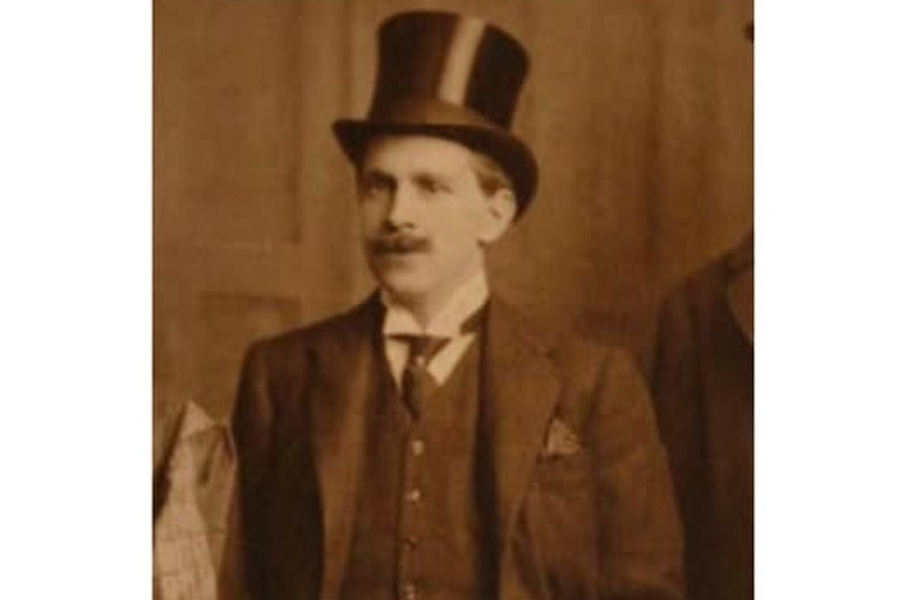
I think of Horace De Vere Cole as a man who treated the early twentieth century like a drawing room with the curtains left open. Born in 1881 in Ballincollig, County Cork, he belonged to a world of inherited rank, old names, and strict manners. He also seemed determined to make that world wobble. He was not a conventional politician, soldier, businessman, or writer. He was something stranger and more memorable: a practical joker with aristocratic instincts and a taste for theatrical disruption.
His full name is often given as William Horace de Vere Cole, and the “de Vere” part carried the weight of family history. He came from money, from military service, from Irish and English connections, and from a line that expected social gravity. Yet his life moved in the opposite direction, toward trickery, impersonation, and high comedy. He could walk into an establishment and make it look foolish without even raising his voice. That is a rare gift. It is also a dangerous one.
Early life, education, and the making of an eccentric
I see his childhood as a collision between privilege and instability. His father was Major William Utting Cole, an army officer who died of cholera in India while Horace was still young. His mother was Mary de Vere, linked to a family with property and status in Ireland. That mix of military discipline and old family inheritance seems to have left him with confidence, access, and a certain emotional distance.
He was educated at Eton and then Trinity College, Cambridge, but he did not build a career in the ordinary sense. He served in the Second Boer War, was wounded, and was invalided out. He later received a disability pension and reportedly gave it away to the war widows and orphans fund. That gesture matters because it shows that he was not simply a clown. He could be generous, even noble, in his own crooked way.
There was also a lasting hearing impairment after childhood illness, which may have added to the sense that he stood a little apart from the room. Sometimes an outsider looks in and sees the whole mechanism. Horace seems to have understood how status worked, how ritual worked, and how easily those things could be punctured.
The family around him
Horace without his family is incomprehensible. His father, Major William Utting Cole, reflects the military he came from. He inherited from his mother, Mary de Vere, an Irish landowner who provided the family depth and status. Both lines met in Horace like steel and silk.
Anne de Vere Cole, subsequently Anne Chamberlain, was his sister and a fascinating familial link. She married a future UK prime minister, Neville Chamberlain. Horace became the brother-in-law of a cautious, diplomatic, and stately man. The difference is nearly comical. The one brother-in-law spent his adult life working to stabilize institutions, while the other seemed to test how far they could be twisted before breaking.
John James Burke Cole, Horace’s brother, is less well-known. In a boisterous family record, he is a calmer note.
His first wife was Denise Ann Marie Jose Lynch Daly. Dublin hosted their 1918 wedding. Horace married an Irish heiress, adding to his money and status. Valerie Cole was their daughter. After Valerie married Marcel Crosia in 1945, Horace had a notable descendant line.
Mrs. Wright, subsequently Mavis Wheeler, was his second wife. As a waitress, model, and member of the period’s creative and social circles, she was a striking figure. Her 1931 marriage to Horace. Their 1935-born son Tristan de Vere Cole became a television director. Family histories have complicated Tristan’s parentage, but the public story links him to Horace as son and heir to an unusual visibility.
The great pranks and the public mask
Horace did not merely entertain people. He destabilized them. His most famous stunt was the 1910 Dreadnought Hoax, when he and a group of accomplices posed as Abyssinian royalty and were received by the Royal Navy aboard HMS Dreadnought. I think this mattered because it was not a random joke. It was a precision strike against authority. The Navy was supposed to be impregnable, ceremonial, and sure of itself. Horace revealed that the right costume and the right script could turn certainty into embarrassment.
He pulled off other pranks as well. He was known for impersonations, absurd disguises, and social invasions that made the powerful look unguarded. He enjoyed being mistaken for someone else, and he seems to have understood that public identity is often just a costume with better tailoring. In one sense, he was a kind of performance artist before the term existed. In another, he was a mischievous saboteur with excellent timing.
What fascinates me most is that his jokes were often elaborate enough to require planning, courage, and a cool nerve. He was not tossing pies. He was building little collapses in the architecture of respectability.
Money, property, and decline
Horace’s economics contradict his social confidence. He received West Woodhay House in 1906, demonstrating family wealth and continuity. But he sold it in 1912 because he couldn’t afford maintenance. That moment feels like a biography hinge. His grip on the old estate world was eroding.
Later versions suggest he lost a lot of money in land speculation, including Canadian ventures. At the conclusion of his life, he lived in poverty in France. That decline sharpens his life. Born into privilege, he performed against privilege, and subsequently became consumed by the instability he liked to portray in others.
This irony nearly sparkles. He made institutions look vulnerable, and his fortune was too. Once started, the comedy got away from him.
Why Horace De Vere Cole still matters
I think Horace De Vere Cole remains compelling because he was not neatly one thing. He was not a court jester, not a pure fraud, not a harmless wit, and not a conventional rebel. He was all of those things in fragments. He had a patrician background, a restless imagination, and a taste for exposing the absurd machinery of rank. He also had a family story that reaches into politics, war, inheritance, marriage, and artistic bohemia.
His relatives matter because they help frame the man. William Utting Cole and Mary de Vere gave him his foundation. Anne Chamberlain shows how close he was to the center of public life, even while he mocked it. Denise Lynch Daly and Mabel Winifred Mary Wright mark the two major marriages that shaped his personal world. Valerie Cole and Tristan de Vere Cole carry the line forward into later generations. Around all of them, Horace moves like a bright blade, catching light and throwing it back at the age that produced him.
FAQ
Who was Horace De Vere Cole?
Horace De Vere Cole was an Anglo Irish prankster, social imposter, and notorious practical joker born in 1881. He became famous for elaborate hoaxes, especially the Dreadnought Hoax of 1910.
Who were Horace De Vere Cole’s parents?
His father was Major William Utting Cole. His mother was Mary de Vere. Together they gave him military lineage, inherited status, and access to the social world he later mocked.
Did Horace De Vere Cole have siblings?
Yes. His sister Anne de Vere Cole later became Anne Chamberlain after marrying Neville Chamberlain. He also had a brother, John James Burke Cole, though that name appears much less often in public accounts.
Who were his wives?
His first wife was Denise Ann Marie Jose Lynch Daly, whom he married in 1918. His second wife was Mabel Winifred Mary Wright, later known as Mavis Wheeler, whom he married in 1931.
Did Horace De Vere Cole have children?
Yes. His daughter was Valerie Cole, and his son was Tristan de Vere Cole. Tristan later became a television director.
Why is Horace De Vere Cole remembered today?
I would say he is remembered because he turned social performance into a weapon. He used disguise, timing, and nerve to expose how easily authority can be fooled. That makes him feel modern, even now.