A name carried by history
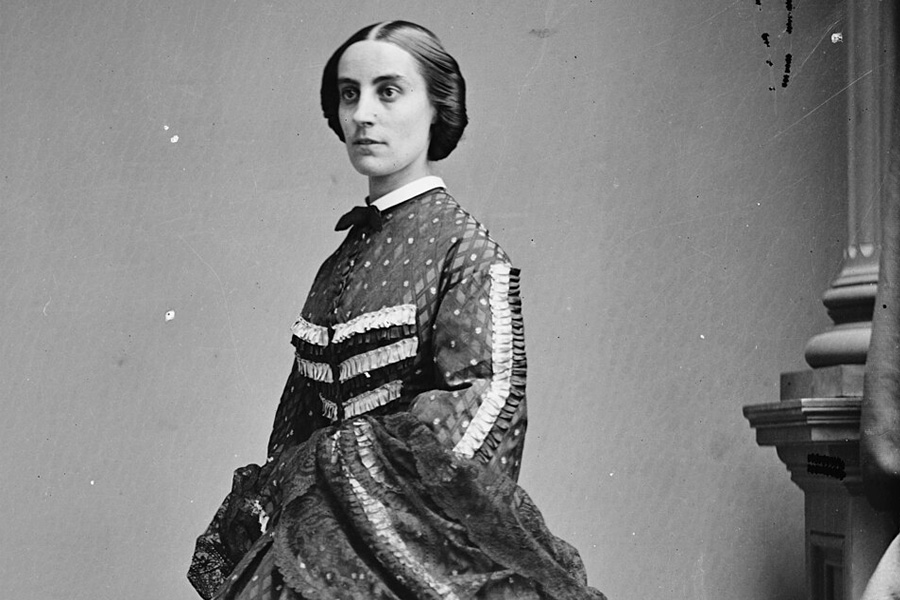
When I look at Elizabeth Hamilton Cullum, I see more than a daughter, wife, or granddaughter. I see a human bridge between the early republic and the Gilded Age, a woman whose life moved through some of the most storied family lines in America. Born in 1831 and dying in 1884, she stood at the meeting point of the Hamilton and Schuyler legacies, but she was not merely a keeper of inherited names. She was an organizer, a patron, a founder, and a quiet force behind causes that outlived her.
Her life unfolded in rooms filled with political memory, military discipline, and social expectation. Yet she did not remain a decorative figure on the edge of history. She helped shape institutions. She gathered people. She gave money, attention, and purpose where they were needed. In that sense, she was like a lamp carried through a long corridor, lighting the next door before she stepped through it herself.
The family web around Elizabeth Hamilton Cullum
Elizabeth’s family tree reads like early American history. John Church Hamilton, son of Alexander and Elizabeth Schuyler Hamilton, was her father. Elizabeth is Alexander Hamilton’s and Elizabeth Schuyler Hamilton’s granddaughter. Her mother, Maria Eliza van den Heuvel, linked her to another prominent Van den Heuvel-Apthorp line.
Her family was prominent in old New York. She came from Hamilton’s public service, biography, law, and memory keeping line. John Church Hamilton spent his life interpreting and preserving his father’s legacy. Elizabeth didn’t inherit a blank slate. Her family archive contained politics, loss, devotion, and public identity.
On her Schuyler side, she was related to a powerful colonial and Revolutionary family. She was from a land, power, military leadership, and elite New York family. Powerful combined effect. Elizabeth had more than money or status. She came from a family saga that was part of the country’s mythology.
Her parents, siblings, and extended kin
Her father, John Church Hamilton, was one of the most important guardians of Hamilton family memory. He was a lawyer and historian who worked to preserve the life of his father, Alexander Hamilton. I think of him as a son who turned remembrance into a lifelong task. His work meant that Elizabeth grew up in a household where history was not distant. It was breathing in the next room.
Her mother, Maria Eliza van den Heuvel, linked Elizabeth to the Van den Heuvel and Apthorp families. Through her, Elizabeth was tied to old New York mercantile and social networks. That maternal branch helped widen the circle of her identity beyond the Hamilton name.
Elizabeth’s siblings formed a large and distinguished household. Among them were Alexander Hamilton, Charlotte Augusta Hamilton, John Cornelius Adrian Hamilton, Schuyler Hamilton, Maria Hamilton Peabody, Charles Apthorp Hamilton, Adelaide Hamilton, William Gaston Hamilton, Laurens Hamilton, and Alice Hamilton. Each sibling carried the weight of a famous surname, but each also had to live as a person inside that shadow. In a family like this, names were both inheritance and responsibility.
Her aunt Angelica Hamilton belonged to the earlier generation of Hamilton children. That ties Elizabeth to the larger circle of the original Hamilton household, where the afterimage of the Founding Era remained vivid for decades.
Her grandparents on her father’s side were Alexander Hamilton and Elizabeth Schuyler Hamilton. Through them, Elizabeth belonged directly to one of the most recognizable founding families in American history. On her mother’s side, her grandparents were John Cornelis Van den Heuvel and Charlotte Augusta Apthorp. This gave her a family profile that was both patriotic and cosmopolitan, rooted in the early republic yet shaped by the elite social world of New York.
I find it striking that Elizabeth’s family identity was never narrow. It had many branches, many accents, many rooms. She was born inside a mansion of memory.
Marriage, widowhood, and a second chapter
Elizabeth first married Henry Wager Halleck in 1855. Halleck was a prominent military figure, best known as a Union general during the Civil War. Their marriage connected Elizabeth to the military and political world of the era in a very direct way. They had one son, Henry Wager Halleck Jr., born in 1856.
That son was her only documented child. His life was brief, and his death seems to have weighed heavily on Elizabeth. Personal loss often becomes a hidden river under public achievement, and I suspect that was true here. Grief can harden into purpose. It can also sharpen compassion.
After Halleck died in 1872, Elizabeth later married George Washington Cullum in 1875. Cullum was another military man, an engineer and officer with a serious professional reputation. Through him, Elizabeth entered another branch of public life, one tied to institutions, discipline, and national service. The surname Cullum became the name most often attached to her later years, and it was under that identity that her philanthropic legacy took on its final shape.
Her public work and achievements
No business or political career defined Elizabeth Hamilton Cullum. She influenced, organized, and donated to build it. Though modest, that was not. Socially prominent women like Elizabeth might transfer private influence into public action in the 19th century.
Her creation of Causeries du Lundi, a women’s literary association, in 1880 is famous. I saw cultural confidence in this. She gave women a place to think, write, and talk seriously. She helped create an intellectual greenhouse salon. Ideas could develop there before being shared.
Her 1884 founding of the New York Cancer Hospital was her most significant achievement. This was no minor gesture. It was institutional vision. Cancer treatment was limited, unpleasant, and experimental then. She entered the future before it had furnishings by founding a disease hospital. She bequeathed her estate to the hospital, turning private wealth into public survival.
Her financial story revolves around that. Her money was not wasted. It became care, permanency, and medicine. Her legacy was structural. It wasn’t a book-pressed blossom. It was bookbinding.
A life in dates
| Year | Event |
|---|---|
| 1831 | Born in New York City |
| 1855 | Married Henry Wager Halleck |
| 1856 | Birth of her son, Henry Wager Halleck Jr. |
| 1872 | Death of Halleck |
| 1875 | Married George Washington Cullum |
| 1880 | Founded Causeries du Lundi |
| 1884 | Helped found the New York Cancer Hospital |
| 1884 | Died in Newport, Rhode Island |
FAQ
Who was Elizabeth Hamilton Cullum?
Elizabeth Hamilton Cullum was a nineteenth century American woman from the Hamilton and Schuyler families who became known for her philanthropy, literary organizing, and role in founding a cancer hospital.
How was she related to Alexander Hamilton?
She was his granddaughter through her father, John Church Hamilton.
Who were her parents?
Her parents were John Church Hamilton and Maria Eliza van den Heuvel.
How many children did she have?
She had one documented child, Henry Wager Halleck Jr.
What was her main legacy?
Her main legacy was philanthropic. She founded Causeries du Lundi and helped establish the New York Cancer Hospital, later linked to Memorial Sloan Kettering.
Was she connected to George Washington Cullum and Henry Wager Halleck?
Yes. She first married Henry Wager Halleck and later married George Washington Cullum.
Why is she historically important?
She connected a famous founding family to late nineteenth century reform and charity. Her life shows how inherited status could be turned into lasting public good.