A Life Shaped by Heritage, Art, and Memory
I think of Mary Louisa Adams Clement as a woman standing at the edge of two worlds. One world was private, domestic, and built from family memory. The other was public, artistic, and preserved in museums, portraits, and donated collections. Born in 1882 in Newbury, Massachusetts, and later living in Washington, D.C., she belonged to one of the most historically resonant family lines in American memory. She was a fifth generation descendant of John Adams and Abigail Adams, and that fact alone casts a long shadow. But Mary Louisa Adams Clement was not merely an heir to a famous name. She was an artist, a watercolorist, and a keeper of family relics whose life felt like a bridge stretched across generations.
Her death in Warrenton, Virginia, in 1950 closed one chapter, but it did not close the story. Her work, her family, and her collection continued to speak after her. In that way, her life resembles a framed watercolor left in sunlight. The paper ages, but the image still holds.
The Family Tree Behind the Name
Mary Louisa Adams Clement came from a family where names carried both intimacy and weight. Her mother was Louisa Catherine Adams Johnson, born in 1856. Her father was Erskine Clement, a Boston banker. Their marriage in 1881 brought together Adams lineage and the practical, professional world of late 19th century New England finance. From that union came Mary Louisa Adams Clement and her brother, Clarence Erskine Clement, born in 1884.
I find the maternal line especially compelling because it links Mary Louisa Adams Clement directly to the Adams presidential family. Her maternal grandparents were Mary Louisa Adams and William Clarkson Johnson. Mary Louisa Adams was the daughter of John Quincy Adams and Mary Catherine Hellen, which places the family within one of the most closely studied lines in American political history. Through this line, Mary Louisa Adams Clement inherited not only ancestry but also a kind of historical inheritance that must have followed her everywhere.
Her mother, Louisa Catherine Adams Johnson, was the connective tissue between old national memory and Mary Louisa Adams Clement’s own century. Louisa Catherine lived from 1856 to 1924. Her life sat between post Civil War America and the modern age. Mary Louisa Adams Clement’s brother, Clarence Erskine Clement, born in 1884 and dying in 1930, completed the immediate sibling circle that appears most clearly in the record.
The family extended farther. On the Adams Johnson side, there were additional relatives including Mary Adams Johnson, John Quincy Adams Johnson, Alexander Bryan Johnson, Abigail Adams Johnson, and Elizabeth Lispenard Johnson. These names form a branching canopy, each one another leaf on the same old tree. I do not see them as isolated entries in a genealogy. I see them as rooms in a house, each preserving a different piece of the family weather.
Artist, Watercolorist, and Keeper of Images
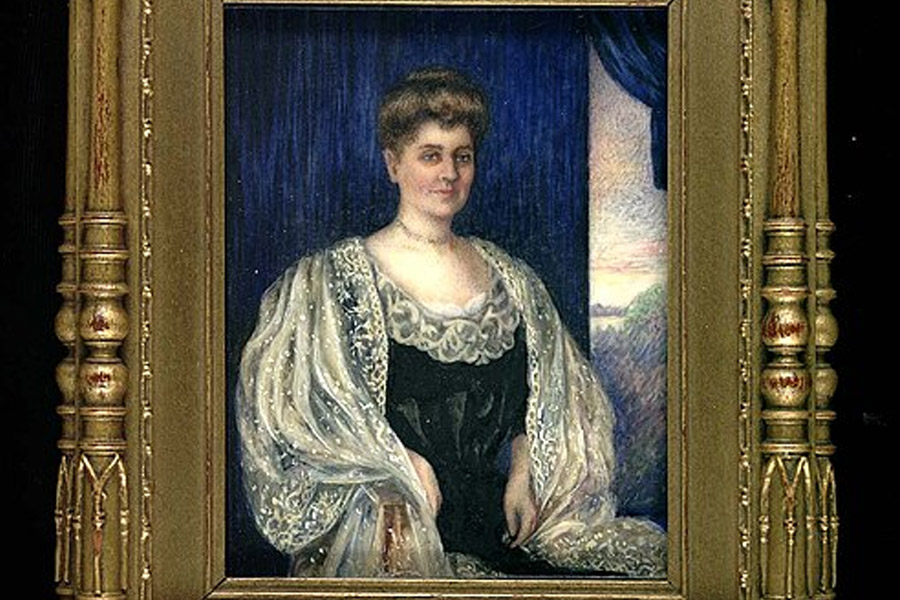
Mary Louisa Adams Clement was an artist. Her remaining watercolors reveal a strong interest in portraiture and landscape. Boy in Peasant Costume (1907), Portrait of a Young Woman (1910), and Louisa Catherine Adams Clement (1910) are recorded. That range suggests she used observation and memory. Portraits need focus on a face, position, and mood. Landscapes require patience and listening. Both demand discipline.
Her art seems quiet and unassuming. It’s quieter, like a held breath. Watercolor is smooth and transparent, making it ideal for family history enthusiasts. Not shouting. It builds. It indicates. Her medium reflects her subject. One fact rarely defines a family legacy. A mix of detail, anecdote, inheritance, and loss.
She was connected with exhibitions, including the Corcoran Gallery, and her pieces were auctioned. She was not a celebrity artist, but she was part of early 20th-century American art. She may not have had many famous works, but what she left shows a skilled hand and a keen eye.
The Adams-Clement Collection and the Art of Preservation
Mary Louisa Adams Clement’s greatest public achievement may have been the Adams-Clement Collection, which she donated in 1950. That collection included more than 600 portraits, along with costumes, furniture, jewelry, china, and letters. I think of this as an act of curatorship as much as donation. She was not simply giving away objects. She was arranging memory.
A collection like that is a family album written in three dimensions. Portraits look back. Dresses hold the shape of bodies long gone. Letters keep voices alive in a paper throat. China and furniture turn domestic life into evidence. Through that gift, Mary Louisa Adams Clement made private history public. She transformed a family attic into national memory.
The collection later opened to the public in 1951, after her death. That timing matters. It means the gift became larger than her own life. She had placed the pieces in the hands of the future. I admire that kind of gesture. It is precise and generous at once.
Money, Standing, and the Hidden Practical World
She keeps her finances private, which is telling. Mary Louisa Adams Clement was from a wealthy family, but her legacy is more about ancestry, art, and collections than ledgers or salary. Her father was a banker, suggesting a financial and trusting household. Mary Louisa Adams Clement appears to have prioritized cultural capital over financial display.
Finance was still part of her universe. The proof is thinner, and her life is best remembered in an archive, not a bank statement. Some leave wealth. People leave portraits. Some leave both. I think Mary Louisa Adams Clement fits the second category best.
A Timeline That Feels Like a Family River
I like to read her life as a timeline with branches. It begins before her birth, in the marriages and births of her ancestors, and it continues after her death through the collection she donated.
Her grandmother Mary Louisa Adams was born in 1828 and married William Clarkson Johnson in 1853. Her mother Louisa Catherine Adams Johnson was born in 1856 and married Erskine Clement in 1881. Mary Louisa Adams Clement was born in 1882. Her brother Clarence Erskine Clement arrived in 1884. She created works in the first decade of the 1900s, including portraits and landscapes. Her mother died in 1924, her father in 1928, and her brother in 1930. In 1950 she donated the Adams-Clement Collection and later died that same year. In 1951 the collection opened publicly.
That sequence feels less like a list than a current. One generation feeds another. Names move forward like boats on a river, each carrying a portion of the past.
FAQ
Who was Mary Louisa Adams Clement?
Mary Louisa Adams Clement was an American artist and watercolorist born in 1882 in Newbury, Massachusetts. She was also a fifth generation descendant of John Adams and Abigail Adams, and she later lived in Washington, D.C.
Who were her closest family members?
Her parents were Louisa Catherine Adams Johnson and Erskine Clement. Her sibling was Clarence Erskine Clement. On her maternal side, her grandparents were Mary Louisa Adams and William Clarkson Johnson, connecting her to John Quincy Adams and Mary Catherine Hellen.
What kind of art did she create?
She is known for watercolor works and portraits, along with some landscape painting. Surviving titles include Boy in Peasant Costume, Portrait of a Young Woman, and Louisa Catherine Adams Clement.
What was her main achievement?
Her major public achievement was donating the Adams-Clement Collection in 1950. It included more than 600 portraits and many related family objects, turning a private inheritance into a public historical record.
Why is she historically important?
She matters because she linked art, family memory, and American historical lineage. Her life connects the Adams presidential family to museum collections, portraiture, and the preservation of domestic history in tangible form.