Basic Information
| Detail | Information |
|---|---|
| Full name | Mario José Bergoglio |
| Name used here | Mario Jose Bergoglio |
| Born | April 2, 1908 |
| Birthplace | Turin or the wider Piedmont and Asti area of Italy |
| Parents | Giovanni Angelo Bergoglio and Rosa Margherita Vassallo |
| Nationality | Italian immigrant to Argentina |
| Profession | Accountant and railway employee |
| Spouse | Regina María Sivori |
| Marriage | December 12, 1935 |
| Children | Five |
| Famous child | Jorge Mario Bergoglio, Pope Francis |
| Death | 1961 |
| Reported cause of death | Heart attack |
| Residence in Argentina | Flores, Buenos Aires |
| Religious environment | Roman Catholic, strongly influenced by Salesian life |
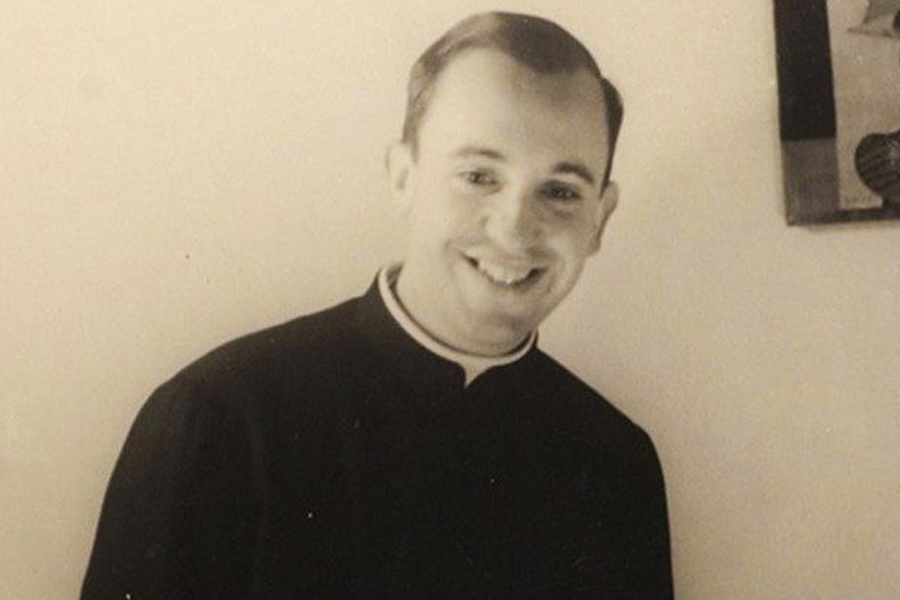
When I look at the story of Mario Jose Bergoglio, I see a family history that begins far from the Vatican. Before his son became Pope Francis, Mario was an Italian immigrant trying to build an ordinary life in Argentina. His story is one of work, migration, faith, family responsibility, and quiet perseverance.
Mario was born on April 2, 1908, in Turin or the surrounding Piedmont area of northern Italy. His family had connections to the Asti region, a part of Italy closely associated with the heritage of Saint John Bosco and the Salesian tradition. In 1929, Mario traveled to Argentina with his parents, carrying with him the hopes and uncertainties common to immigrant families.
That journey became one of the defining chapters of the family’s history. The Bergoglios had narrowly avoided traveling on the Principessa Mafalda, an Italian ocean liner that sank in October 1927. Years later, Pope Francis would remember the family’s migration story as an example of what he regarded as providential timing.
Mario Jose Bergoglio Early Life and Immigration to Argentina
Mario grew up in Piedmont, a region shaped by Catholic culture, close family relationships, and the experience of migration. His parents were Giovanni Angelo Bergoglio and Rosa Margherita Vassallo. Mario was their only child.
The family eventually decided to leave Italy for Argentina in 1929. Their arrival coincided with the beginning of a difficult economic period. Argentina, like much of the world, was affected by the Great Depression, and the family’s plans did not unfold easily.
Initially, relatives in the Paraná area were involved in paving and construction. The economic downturn created setbacks, however, and the Bergoglios experienced financial instability. Mario took administrative work, including employment connected with a hosiery factory, before establishing himself professionally as an accountant.
Eventually, he secured a position with the Argentine state railways. That job gave the family something extremely valuable: stability.
For Mario, employment was more than a way to earn money. It was the foundation beneath a growing household. His railway work helped him provide for his wife and five children while maintaining a modest middle class existence in Buenos Aires.
Marriage to Regina María Sivori
Mario and Regina María Sivori married on December 12, 1935, in a Salesian church in the Almagro area of Buenos Aires.
Regina was born in Buenos Aires to Italian parents Francisco Sivori and Maria Gogna on November 25, 1911. Like Mario’s family, hers tied the household to Argentine society’s large Italian immigrant population.
Mario’s mature life revolved around their marriage. The pair integrated Catholicism, Italian culture, education, music, and discipline into their home.
Regina was a kind mother who valued education and ambition. Despite their poverty, the family encouraged their children to learn and develop their skills.
Daily life included music. The youngsters studied piano and violin, while opera and Italian culture were household staples.
The family also remained close to Father Enrico Pozzoli and the Salesians. His presence was a key link between Mario and Regina’s family and their eldest son’s future career.
Mario Jose Bergoglio and His Five Children
Mario and Regina had five children. Their eldest was Jorge Mario Bergoglio, who would eventually become Pope Francis.
Jorge Mario Bergoglio Pope Francis
Jorge Mario Bergoglio was born on December 17, 1936, in Buenos Aires. He was the first child of Mario and Regina.
His childhood was shaped by his father’s immigrant experience and his mother’s determination to educate the family. Jorge later trained as a chemical technician before entering religious life. He became a Jesuit priest, bishop, archbishop, cardinal, and eventually pope in 2013.
Mario died in 1961, when Jorge was only 24 years old. He therefore never witnessed his son’s later rise through the Catholic Church or his election as pope.
Yet Mario’s influence remained visible in Francis’s reflections on migration, work, family, simplicity, and responsibility. The future pope often spoke warmly about the lessons he learned from his parents.
Óscar Adrián Bergoglio
Óscar Adrián Bergoglio was born in 1938 and was one of Mario’s sons.
He married María Teresa Pita and had children. Unlike his famous older brother, Óscar lived largely outside public attention. His relative privacy means that considerably less information is available about his professional and personal life.
His place in the family was nevertheless important. The Bergoglio household remained closely connected through its shared Italian heritage and Catholic upbringing.
Marta Regina Bergoglio
Marta Regina Bergoglio was born in 1940. She married Enrique José Narvaja and had sons, including José Luis Narvaja, who later became a Jesuit priest.
Her family therefore continued the religious tradition that had already become deeply established among the Bergoglios.
Marta’s story also illustrates how Mario and Regina’s influence extended beyond Jorge. Faith was not simply something associated with the future pope. It was woven through several generations of the family.
Alberto Horacio Bergoglio
Alberto Horacio Bergoglio was born in 1942.
Compared with Jorge, Alberto remained a private figure, and relatively little detailed information about his career and personal life is publicly available. His life was nevertheless part of the family structure that Mario and Regina carefully maintained during the difficult postwar years.
María Elena Bergoglio
María Elena Bergoglio, born around 1948, was the youngest of Mario and Regina’s children and the only sibling of Pope Francis still living when he died in 2025.
She maintained a close relationship with her older brother. Her memories and family perspective have helped preserve a more personal image of Jorge Mario Bergoglio as a son and brother rather than simply as a global religious leader.
The Salesian Influence on the Bergoglio Family
One of the most fascinating parts of Mario Jose Bergoglio’s family story is the Salesian connection.
The Salesians of Don Bosco played a significant role in the religious environment surrounding the Bergoglio household. Mario arrived in Argentina with a recommendation connected to Salesian circles, and he became close to Father Enrico Pozzoli.
Pozzoli served as confessor, adviser, and spiritual guide. His relationship with the family became so close that he was effectively a spiritual father to them.
He also helped connect Mario with the Sivori family. His role therefore reached into the very beginning of Mario and Regina’s marriage.
Jorge was baptized by Pozzoli on Christmas Day 1936, only eight days after his birth. The ceremony took place in the Salesian Basilica of Mary Help of Christians and St. Charles in Almagro.
Years later, Jorge attended the Salesian Colegio Wilfrid Barón de los Santos Ángeles in Ramos Mejía. In 1949, he spent time there as a boarding student alongside his brother Óscar.
That experience left a strong impression. The education combined academic study with prayer, sports, manual work, community life, and attention to disadvantaged people. For young Jorge, it was not merely classroom education. It was an introduction to a way of living faith through everyday action.
The Salesian environment also contributed to his early awareness of priesthood. Although he eventually chose the Jesuits rather than the Salesians, the Salesian tradition helped shape the spiritual soil in which his vocation developed.
Mario Jose Bergoglio Career and Financial Life
Mario was a practical worker. After studying accounting, he joined the Argentine state railroads.
Neither wealth nor business fame characterized his career. Instead, he achieved stability.
The family struggled financially throughout the Depression. Mario adopted administrative jobs after his commercial ventures failed.
His railroad job supported the family’s modest Flores lifestyle. Money was used for family support, not status.
Education remained important. The children studied music and developed cognitively despite the family’s poor means.
Mario’s greatest professional achievement may have been generating security in unpredictable times.
Mario Jose Bergoglio as a Father
I find the contrast between Mario’s ordinary profession and his son’s extraordinary future particularly striking.
Mario was an accountant. He worked, came home, raised children, followed football, enjoyed music, and maintained his faith. He did not become famous during his lifetime.
He was also a supporter of San Lorenzo de Almagro, a football club that his son Jorge would continue to love.
His family remembered him as hardworking and affectionate, with a strong attachment to Italian traditions. His values were practical: work hard, protect the family, respect education, maintain faith, and remain connected to one’s roots.
These ideas later appeared repeatedly in Pope Francis’s public reflections. His concern for migrants and workers was not simply an abstract political or theological position. It was connected to a family history in which immigration and economic uncertainty were lived realities.
Regina María Sivori and the Family Home
Regina’s influence matters too.
After the couple’s fifth child was born, she became paralyzed. Despite those challenges, Mom was important to the children’s upbringing.
She stressed discipline, education, culture, and religion. Though modest, the home was intellectually and culturally active.
Family prayed, practiced Italian customs, listened to music, and engaged in parish life. Father Pozzoli’s frequent visits enhanced the household-Salesian community bond.
Jorge’s demeanor reflected this family discipline and kindness.
Mario Jose Bergoglio Death in 1961
Mario died in 1961 at approximately 53 years old.
Accounts describe his death as a heart attack that occurred while he was watching or participating in a basketball game. His death came relatively early in the lives of his children.
Jorge was only 24. He had already begun his Jesuit formation, but his religious career was still in its early stages.
Mario therefore never saw the extraordinary path his eldest son would take. He never saw Jorge become a priest in 1969, a bishop in 1992, archbishop of Buenos Aires in 1998, cardinal in 2001, or pope in 2013.
He also never saw his son become the first pope from the Americas and the first pope from the Southern Hemisphere.
The Family Legacy After Mario’s Death
Mario Jose Bergoglio’s descendants carried on his legacy.
Jorge’s papacy brought global notice to a humble Buenos Aires family. Pope Francis’ Italian immigrant origins was publicized.
Mario’s experience also explained Francis’s emphasis on migrants, employment, dignity, family, and poverty. The voyage from Piedmont to Argentina by his father was not purely genealogical. The pope’s emotional worldview included it.
Salesian influence added another depth. Jorge was taught by Father Pozzoli and the Salesian community to value youth, practical education, compassion, joy, and closeness to others.
Jorge became a Jesuit, but Salesian influence remained.
Extended Timeline of Mario Jose Bergoglio and His Family
| Year | Family event |
|---|---|
| 1908 | Mario Jose Bergoglio is born in northern Italy |
| 1929 | Mario emigrates to Argentina with his parents |
| 1935 | Mario marries Regina María Sivori |
| 1936 | Jorge Mario Bergoglio is born |
| 1938 | Óscar Adrián Bergoglio is born |
| 1940 | Marta Regina Bergoglio is born |
| 1942 | Alberto Horacio Bergoglio is born |
| ~1948 | María Elena Bergoglio is born |
| 1949 | Jorge and Óscar attend the Salesian school in Ramos Mejía |
| 1950s | Mario works as an accountant for the Argentine railways |
| 1958 | Jorge enters the Jesuit novitiate |
| 1961 | Mario dies at approximately age 53 |
| 1969 | Jorge is ordained a Jesuit priest |
| 1998 | Jorge becomes Archbishop of Buenos Aires |
| 2001 | Jorge is elevated to cardinal |
| 2013 | Jorge becomes Pope Francis |
| 2025 | Pope Francis dies, leaving María Elena as his surviving sibling |
FAQ
Who was Mario Jose Bergoglio?
Mario Jose Bergoglio was the Italian-born father of Pope Francis. He immigrated to Argentina in 1929, worked as an accountant, and eventually held a position with the Argentine state railways. He married Regina María Sivori and had five children.
When was Mario Jose Bergoglio born?
Mario Jose Bergoglio was born on April 2, 1908, in Turin or the surrounding Piedmont and Asti area of Italy.
Who was Mario Jose Bergoglio’s wife?
His wife was Regina María Sivori, born in Buenos Aires on November 25, 1911. They married on December 12, 1935, and raised five children together.
How many children did Mario Jose Bergoglio have?
Mario and Regina had five children: Jorge Mario, Óscar Adrián, Marta Regina, Alberto Horacio, and María Elena Bergoglio.
Was Mario Jose Bergoglio wealthy?
There is no indication that Mario was wealthy. He experienced financial difficulties as an immigrant during the Depression era and later achieved a modest degree of stability through his accounting career with the Argentine railways.
What did Mario Jose Bergoglio do for a living?
He worked primarily as an accountant. Before obtaining his railway position, he also had administrative and business-related work in Argentina.
How did the Salesians influence Pope Francis?
The Salesians played an important role in Jorge’s early religious formation. Father Enrico Pozzoli was especially influential in the Bergoglio family, serving as a spiritual guide and helping connect the family with Salesian religious life. Jorge later attended a Salesian boarding school, where his vocation began to develop.
Did Mario Jose Bergoglio live to see his son become pope?
No. Mario died in 1961, more than five decades before Jorge Mario Bergoglio was elected pope in March 2013.
Who was Mario Jose Bergoglio’s most famous child?
His eldest child, Jorge Mario Bergoglio, became Pope Francis. He served as pope from 2013 until his death on April 21, 2025.
Who was the surviving sibling of Pope Francis?
María Elena Bergoglio, the youngest of the five children of Mario Jose Bergoglio and Regina María Sivori, was the only surviving sibling of Pope Francis when he died in 2025.